
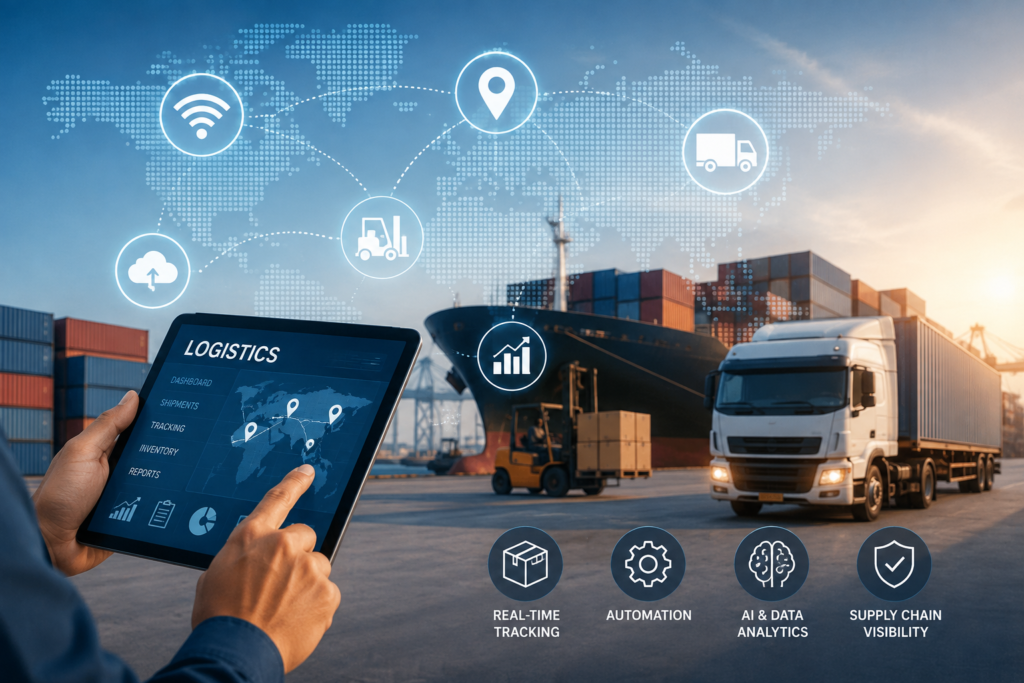
The logistics industry has always been essential to global commerce. From moving raw materials to delivering finished products to customers, logistics connects businesses, suppliers and consumers across different locations.
However, the way goods are transported, tracked and managed is changing rapidly. Technology is transforming logistics and supply chain management, helping businesses improve efficiency, reduce costs and provide better customer experiences.
The Growing Role of Technology in Logistics
Traditional logistics operations often relied heavily on paperwork, phone calls and manual processes. While these methods can still play a role, they become increasingly difficult to manage as businesses handle larger volumes of shipments and more complex supply chains.
Digital technologies now allow logistics companies to manage many of these processes more efficiently. Businesses can use software to track shipments, manage inventory, communicate with customers and monitor transportation activities from a central platform.
This greater visibility can help businesses identify delays, reduce errors and make faster decisions.
Real-Time Shipment Tracking
One of the most noticeable changes in modern logistics is the ability to track shipments in real time.
GPS technology and digital tracking systems allow businesses and customers to monitor the movement of goods throughout the delivery process. Instead of waiting for updates from a driver or logistics provider, customers can receive information about where their shipment is and when it is expected to arrive.
For logistics companies, tracking technology can also help improve fleet management and identify potential delays before they become major problems.
Automation and Artificial Intelligence
Automation is another area transforming logistics operations. Repetitive activities such as order processing, inventory updates, documentation and shipment notifications can increasingly be handled by digital systems.
Artificial intelligence can take this further by analysing large amounts of data and identifying patterns. Logistics businesses can use data to improve route planning, forecast demand and make better decisions about inventory and transportation.
The goal is not simply to replace human workers but to allow employees to spend more time on activities that require judgement, communication and problem-solving.
Technology and Customer Experience
Customers now expect more transparency from logistics providers. They want to know when their orders have been dispatched, where their packages are and when they are likely to arrive.
Technology makes it possible for logistics companies to provide these updates quickly and consistently.
A strong digital experience can therefore become an important competitive advantage. Businesses that combine reliable delivery with clear communication can build greater customer confidence and encourage repeat business.
The Future of Logistics
Technology will continue to influence the logistics industry as businesses look for faster, more efficient and more reliable ways to move goods.
Cloud-based logistics platforms, artificial intelligence, automation, digital documentation and advanced tracking systems are likely to become increasingly important across the supply chain.
However, technology alone does not guarantee success. Logistics businesses still need reliable infrastructure, skilled professionals, strong supplier relationships and effective operational processes.
The companies that succeed will be those that combine technology with sound logistics management and a clear understanding of their customers’ needs.
Conclusion
Technology is no longer simply an additional tool for the logistics industry. It is becoming an important part of how modern supply chains operate.
From real-time tracking to artificial intelligence and automation, digital solutions are helping logistics businesses improve visibility, efficiency and customer service. As global commerce continues to evolve, embracing these technologies will be increasingly important for businesses that want to remain competitive.